
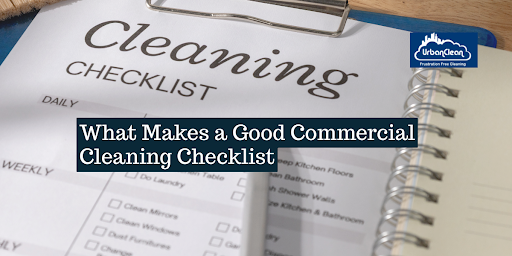
What Makes a Good Commercial Cleaning Checklist
A good commercial cleaning checklist breaks tasks into daily, weekly, and monthly routines. It also assigns clear responsibilities and covers high-touch areas like door handles and light switches.
On the other hand, “general cleans” from cleaning contractors often miss the small stuff like dusty vents, allergens, and washrooms that need more than a quick wipe. These details slip through because there is no checklist holding anyone accountable.
At urbanclean.com.au, we create personalised cleaning solutions for offices, medical centres, and commercial spaces across Australia. And notice how most businesses don’t realise parts of their cleaning routine are being overlooked until issues become hard to ignore.
In this article, we’ll walk you through what a solid commercial cleaning checklist should include. You’ll also learn how to evaluate professional cleaning services and why the right structure protects your office space, your team, and your business image.
Let’s start with the areas that form the foundation of every cleaning checklist.
What Every Commercial Cleaning Checklist Should Cover
The best commercial cleaning checklists group tasks by frequency and assign them to specific team members. This keeps daily maintenance on track and makes sure nothing slips through the cracks.
Below, we’ll break down what to include at each level so you can build a checklist that actually works.
Daily Cleaning Tasks for a Hygienic Workspace
Daily cleaning focuses on the areas people touch most, like door handles, light switches, and desks. These high-touch surfaces collect the most germs, so they need to be wiped down every day. Shared equipment, like printers and reception counters, should also receive the same regular attention to keep spaces clean and safe.
Next, empty and re-line all rubbish bins daily, since they fill up fast in busy offices. And while you’re at it, don’t forget to tidy the common areas like kitchens and break rooms. This means wiping down tables and benches, cleaning up spills, and clearing away used dishes to keep the space neat and presentable for staff and visitors.
Floors are another daily priority. Start by vacuuming carpets in high traffic areas to catch dirt before it wears into the fibres. For hard floors like tile, vinyl, or wood in entryways and hallways, a quick mop usually stops dust and mud from spreading through the building.
And remember to restock toilet paper, paper towels, and other washroom supplies before they run out.
Pro tip: Keep cleaning supplies like disinfectant wipes, surface sprays, microfiber cloths, paper towels, and a small mop or vacuum stored close to high-use areas. Quick access makes it easier to handle small messes right away instead of letting them build up.
Weekly and Monthly Office Cleaning Tasks
Some areas, like window sills, storage shelves, and skirting boards, don’t need daily cleaning but still collect dust over time. You can include these spots in your weekly cleaning instead, along with breakroom appliances, meeting rooms, and other shared spaces to keep everything under control.
After the weekly upkeep, you can focus on deeper maintenance through monthly cleaning. This involves steam cleaning carpets, dusting ceiling fans and blinds, wiping light fixtures and air vents, and cleaning interior windows to keep the space looking professional.
Customising the Checklist to Your Office Space
Every industry has different hygiene risks, so your checklist should reflect that. For example, gyms need daily sanitisation of equipment and shower areas. Aged care facilities, on the other hand, require strict infection control measures, including daily disinfection of high-touch surfaces and proper sanitising of shared equipment.
Similarly, commercial kitchens must follow food-safe rules by cleaning prep areas, sanitising tools between tasks, and managing waste properly. These practices keep them aligned with Australian standards like Food Standards Australia New Zealand (FSANZ) and local council rules.
Generic checklists rarely cover these areas. That’s why your checklist should consider your foot traffic, surface types, and any industry compliance rules that apply to your business.
Commercial Cleaning Services: What to Expect and What to Demand
Good cleaning contractors bring structure, accountability, and reliable results to your workplace. They don’t just show up with a mop and figure it out as they go.
Instead, here’s what to look for when choosing a cleaning team that actually delivers.
Professional Cleaning Services vs. Casual Cleaners
Hiring a casual cleaner might seem like the easy option, but it often falls short. Compliance standards have become stricter in recent years, especially in healthcare, hospitality, and aged care settings (as we covered earlier).
If we’re being specific, in Australian healthcare, this means following the Australian Guidelines for the Prevention and Control of Infection in Healthcare. Here, hospitality businesses like hotels and restaurants follow the Food Standards Australia New Zealand food safety standards, while aged care facilities align with the Aged Care Quality Standards.
Without proper training or a clear system to track work, a solo cleaner may miss high-touch areas or skip steps. And that puts your business at risk of not meeting compliance requirements.
On the contrary, professional cleaning services work in a more structured way. Their teams follow detailed checklists and documented service plans so every area gets equal attention.
Plus, they track and record every task, so you can see exactly what they completed and what still needs attention. This kind of setup means fewer missed spots and more consistent results across your office space.
What Your Cleaning Contractors Should Provide
Your cleaning contractors should hand you a documented scope of work before they start. This document lists every task, who handles it, and how often it happens, so everyone knows what to expect.
After defining the scope, the team will follow it through routine cleaning that covers daily and weekly tasks. However, you should also schedule deep cleans on a monthly or quarterly basis to tackle bigger jobs like carpet shampooing, high-level dusting, and deep sanitising of hard-to-reach areas.
On top of that, ask for digital reports or inspection logs as proof of work. These records will allow you to monitor performance and make sure the work matches what was agreed upon.
How a One-Stop Solution Reduces Friction
A one-stop solution means one provider handles all your cleaning needs in one place. So you don’t have to coordinate with different cleaners or handle multiple contracts, which keeps everything simple and organised.
This setup also improves communication between your team and the cleaners. Standards stay consistent across offices, washrooms, kitchens, and meeting rooms as well. And when something needs fixing, you have one point of contact to sort it out.
Improve Cleanliness and Compliance with a Checklist
So, does your current cleaning routine cover everything it should? If you’ve read this far, you’ve probably spotted a few gaps worth fixing.
A commercial cleaning checklist acts as the backbone of your workplace hygiene, infection control, and overall client perception. So make sure your daily, weekly, and monthly office cleaning tasks are all written down in one place.
Remember, a good cleaning contractor will often customise their services to your specific needs rather than giving you a cookie-cutter plan. At the same time, your office cleaning standards should follow the requirements that apply to Australian workplaces.
If you need support getting your cleaning process on track, we are here to help. You can call Urban Clean at 1300 787 745 or request a free quote through our website to get started. We’ll put together a structured checklist that suits your business and keeps your office space looking its best.